

A design system is often introduced as a library of buttons, colors, and spacing. Those pieces matter, but they are not the real product. The real product is a shared language: a way for designers and engineers to name the same thing, change it in one place, and ship without translating every decision twice.
The problem a system actually solves
When a product grows, UI decisions start to scatter. A hover state lives in Figma. A hex value lives in CSS. A spacing rule lives in someone’s memory. Each team is right about their own file, and still the interface drifts.
That drift is expensive. Handoffs get longer. Reviews turn into debates about pixels. Small visual updates require several people because nobody is sure which source is canonical.
A system reduces that cost by making the important decisions named, reusable, and owned.
Tokens before components
Tokens are the smallest named decisions in a product: color, type, space, radius, elevation. They sit under components, not beside them.
If a team starts with components and skips tokens, every button still hard-codes its own gray. When the brand shifts, someone has to hunt through dozens of files. If the team starts with tokens, a brand shift is a change to a few named values, and the components follow.
This is the same idea this portfolio uses in CSS: primitives first, then semantic names that describe role (color-text-secondary) instead of appearance (gray-400).
Documentation is part of the interface
A token or a component that only exists in code is incomplete. A designer cannot use what they cannot find. An engineer cannot implement what is described only as a screenshot.
Useful documentation answers three questions:
- What is this called?
- When should I use it?
- What happens if I change it?
If those answers live next to the component, the system becomes a conversation tool instead of a police report.
A practical takeaway
If you are starting a system, do not wait for a perfect library. Pick one surface of the product, name its colors and spacing, and use those names in both design and code. The first win is not visual consistency. The first win is that two people can point at the same name and mean the same thing.
For this reason I created Bravo, a Design System Starter Pack for teams that want to start their Design System from a solid, documented and for AI ready library.
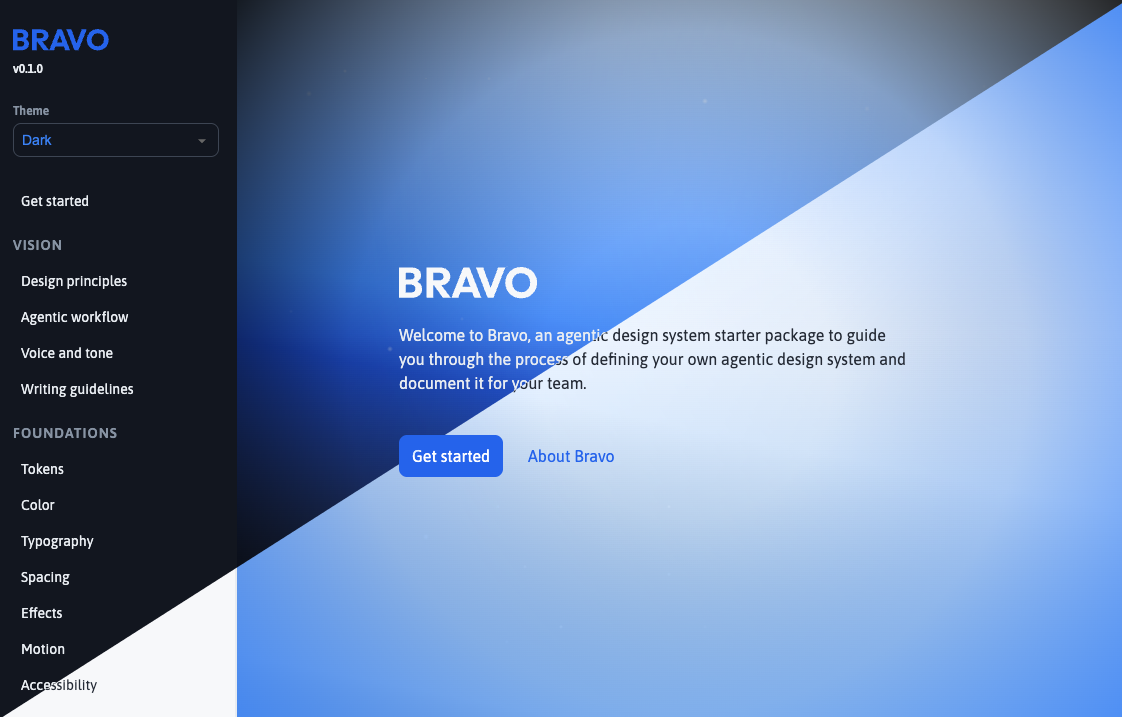
You can learn more and access the Bravo Design System Starter Pack here: https://github.com/jcmartinezma/bravo-agentic-design-system